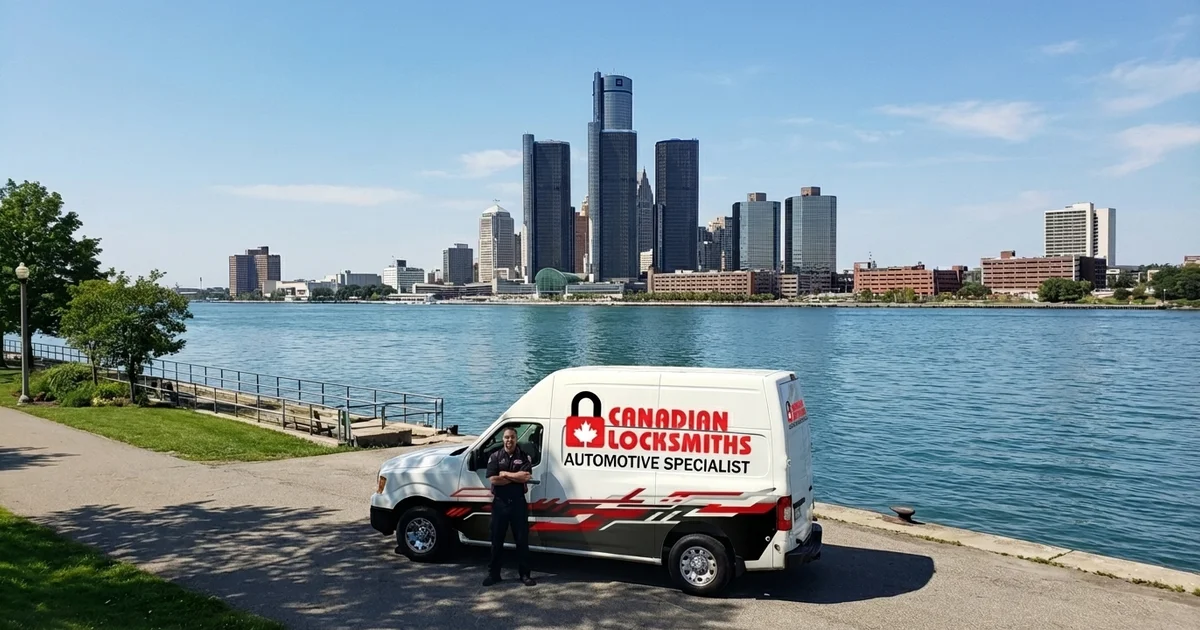
The story behind the credential question
A 2022 Honda Civic Touring was parked at a home in the Devonshire Mall corridor. The owner had lost her only smart key fob earlier in the week and was searching her phone for a Windsor locksmith to program a replacement on-site. Three Google results came back with nearly identical taglines: "Licensed, bonded, and insured. Mobile service. Free quote." None of the three listed a specific license number, a specific bond carrier, or a specific insurance company. Price quotes ranged from $180 to $480+ for what should have been the same job: cut the mechanical blade to the door code, pair a new smart key fob through the immobilizer, verify push-button start, and hand a working key back.
She picked the middle quote. The technician arrived an hour late in an unmarked car, plugged a generic aftermarket programmer into the OBD-II port, attempted to write a new fob without Honda HDS access or NASTF VSP credentials, and walked away after 45 minutes with a key that locked and unlocked the doors but failed to start the engine. The immobilizer module had been left in a half-paired state. The customer paid cash, got no receipt, and the unmarked locksmith stopped answering his phone the next day. The dealer recovery quote came in at $1,200 to re-initialize the BCM, clear the half-paired key from memory, and program a new fob from scratch. There was no insurance to file against because no one knew what insurance had ever been in place.
This is the situation a real credential is built to prevent. Each of the six credentials below tells the customer, in advance and verifiable in under five minutes, that the person about to touch the vehicle is operating within a system that has consequences when work goes badly.
The six credentials that exist for Ontario automotive locksmith work
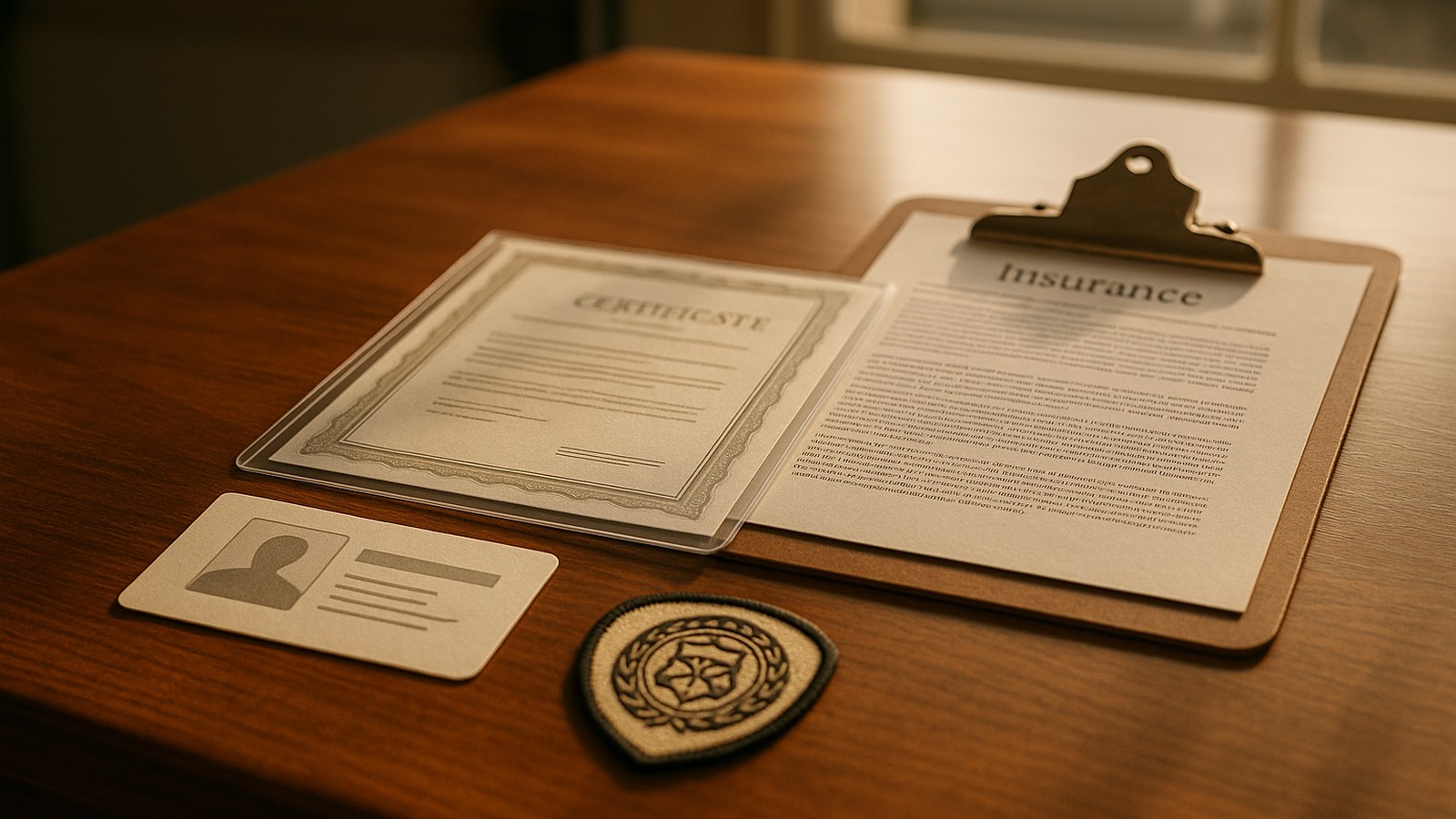
Six third-party verifications exist in the Ontario market. Together they form the credential stack a legitimate automotive locksmith operates within. Each one is independently verifiable through the issuing organization.
| Credential | Issuing Organization | What It Confirms |
|---|---|---|
| NASTF VSP | National Automotive Service Task Force | Authorized access to OEM key code data and immobilizer reset authorization |
| CAA Approved | Canadian Automobile Association | Independent inspection and audit of automotive service quality and pricing |
| CAA Club Group ERS Network Provider | CAA Club Group | Active dispatch partner for roadside key services |
| TAOL Certified and Bonded | The Associated Ontario Locksmiths | Ontario-specific bonding and certification standard |
| BBB A+ Rating | Better Business Bureau | Complaint-free public file with the Western Ontario BBB |
| Provincial license, WSIB clearance, commercial liability insurance | Province of Ontario, WSIB, commercial insurer | Government and insurer-level compliance for the business behind the locksmith |
The first four credentials, NASTF VSP, CAA Approved, CAA ERS Network Provider, and TAOL, are professional credentials held by very few automotive locksmiths in Ontario. The BBB Rating is a profile-level signal calculated automatically from complaint history. The last group, provincial business registration plus WSIB plus commercial liability insurance, is the regulatory floor every legitimate Ontario locksmith should meet, although stating "licensed, bonded, and insured" without naming the insurer is a common shortcut that means nothing.
Canadian Locksmiths is a NASTF-authorized Vehicle Security Professional (VSP), CAA Approved Locksmith, active CAA Club Group ERS Network Provider, TAOL Certified and Bonded, and BBB A+ Rated with the Better Business Bureau Serving Western Ontario. Family-owned and operated in Windsor since 1989, with commercial liability insurance carried through HUB International. Each one of these is verifiable in the issuing directory.
Tools and verification paths for each credential
A real credential names three things at a minimum: the issuing organization, the year the credential was granted or renewed, and a public verification mechanism. If any of the three is missing, the claim is operationally hollow.
| Credential | Public Verifier | Verification Path |
|---|---|---|
| NASTF VSP | nastf.org public directory | Search by city or state, locate the credentialed VSP by business name |
| CAA Approved | caa.ca Auto Repair Service finder | Search by postal code or city, listed shops are inspected and audited |
| CAA Club Group ERS Provider | caaclubgroup.ca network confirmation | Phone CAA to confirm dispatch network membership |
| TAOL Certified | taol.net member directory | Cross-reference business name against the membership list |
| BBB A+ Rating | bbb.org profile lookup | Search by business name, profile shows rating + file age + complaint history |
| Provincial license, WSIB, insurance | Province of Ontario Business Registry, WSIB clearance API, insurance certificate request | Request a current certificate from the locksmith and verify against the named insurer |
Phone verification works for the regulatory floor: ask the locksmith for the name of their commercial insurer and the certificate's policy effective date range. A legitimate locksmith will name a real insurer with a current policy. A non-credentialed operator will hesitate, redirect, or claim "we have insurance" without specifying a carrier.
The verification path is intentionally low-effort. The five-minute pre-booking check should be standard practice for any automotive service over $200, which covers most key replacement jobs in the Windsor market.
What gets done differently by a credentialed locksmith
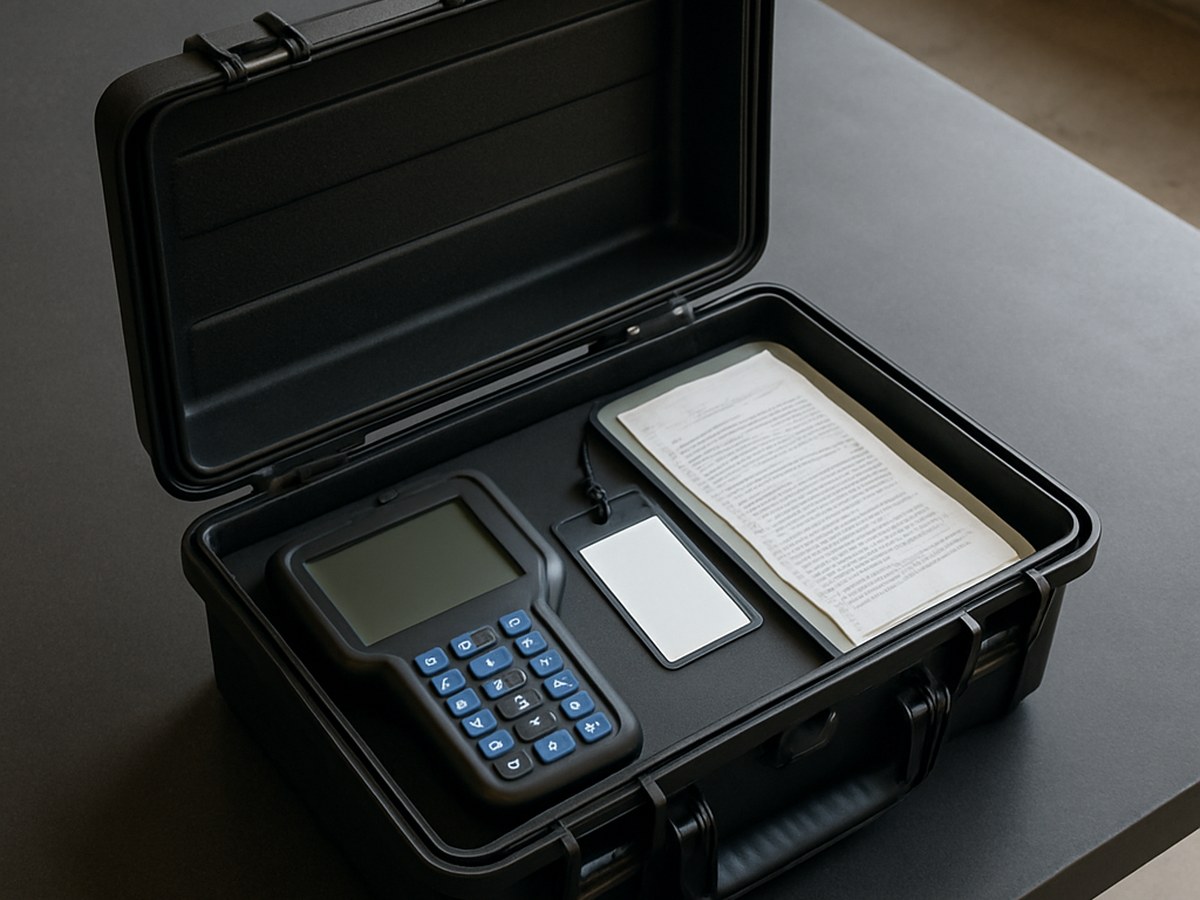
The credentials are not decorative. Each one changes what the technician can do on a vehicle, what tools and data the technician has access to, and what consequences the technician faces if the work goes badly.
A NASTF-authorized VSP has been background-checked, bonded, and approved by participating vehicle manufacturers to request OEM key code data and immobilizer PIN access through the Secure Data Release Model. Without that credential, the only way to write a key into a late-model encrypted immobilizer is to clone an existing working key, decode the lock and cut a mechanical bypass, or attempt aftermarket tool combinations that may or may not succeed and that leave diagnostic trouble codes behind.
CAA Approval requires the shop to pass an on-site inspection covering pricing transparency, complaint handling, insurance, and technical capability. A CAA Approved Locksmith has been audited; the customer has a dispute path through CAA if the work is mishandled. CAA ERS Network membership additionally requires the provider to carry commercial liability insurance specifically naming CAA Club Group as an additional insured, which is filed with CAA on every renewal.
TAOL certification requires Ontario-specific bonding and adherence to the association's standards. BBB A+ Rating signals a complaint-free profile reviewed by a third party. Provincial business registration, WSIB clearance, and named commercial liability insurance together confirm the legal entity behind the technician is a real, current Ontario business with the financial backing to honour a claim if the work damages a vehicle.
A locksmith holding all six is operating inside a system where every step has accountability. A locksmith holding none is operating on word-of-mouth and luck. The technical work on a 2024 Honda Civic Touring smart key is the same in both cases; the difference is what happens when the work goes wrong.
Red flags that signal a non-credentialed operator
These are the patterns Canadian Locksmiths sees every week in calls from drivers who tried a budget option first and now need rework.
- Generic "licensed, bonded, and insured" claim with no specifics. The phrase is repeated by every locksmith in North America. A real credential names the licensor, the bond carrier, and the insurance company. Hesitation when asked for any of these names is the strongest red flag.
- No specific year of business establishment. Vague "we have years of experience" claims hide newly-registered operators. Ontario business registry searches return the actual incorporation date in under 30 seconds.
- Cash-only with no written receipt or invoice. A legitimate Ontario business is registered for HST collection. Refusal to issue an HST-coded invoice is a regulatory red flag, not a discount; the customer loses the dispute path and the manufacturer warranty record.
- Unmarked vehicle with no signage or visible identification. Mobile locksmith vans for credentialed operators are insured commercial vehicles. The insurer requires identifying signage. Unmarked vehicles arriving for locksmith service are an operational mismatch.
- Quote varies wildly between phone and on-site. A real shop quotes a firm price over the phone after verifying year, make, model, trim, and immobilizer state. A bait-and-switch operator quotes a low number to secure the booking, then "discovers" complications on-site that double the price.
- No third-party review presence beyond a few perfect Google reviews. A real shop has a verifiable footprint: BBB profile, CAA listing, Yelp, YellowPages, sustained Google review volume over multiple years. A handful of five-star reviews from accounts created in the last month is not a track record.
- Refuses to discuss insurance carrier or asks the customer to "trust them." Insurance is the financial backstop. A legitimate operator names the carrier without hesitation. Canadian Locksmiths carries commercial liability through HUB International, with a Certificate of Insurance available on request that names the carrier and effective dates.
Insider notes most owners never hear
These ten points cover credential nuance that no marketing copy publishes but every senior locksmith in Ontario understands.
1. NASTF VSP is a federal-grade background check, not a self-attestation
The NASTF Vehicle Security Professional credential is not a sticker. The application requires fingerprint-grade background verification, ongoing audit by the National Automotive Service Task Force, and a surety bond before the credential is issued. Participating manufacturers, including Ford, GM, Stellantis, Honda, Toyota, Hyundai, Kia, Mazda, Subaru, and Nissan, recognize the credential as the gating step before the locksmith can request OEM key codes or immobilizer PIN data through the Secure Data Release Model portal. A locksmith claiming NASTF VSP without appearing in the public directory at nastf.org is making a fraudulent claim.
2. CAA Approval is an inspection, not a paid badge
CAA Approved Auto Repair Service status requires the shop to pass an on-site inspection covering technical capability, pricing transparency, complaint handling, insurance limits, and customer dispute procedures. CAA reviews the file annually and reserves the right to suspend or revoke the credential for repeat complaints or inspection failures. The cost to the shop is incidental compared to the inspection burden. CAA Approval is a working partnership, not a payment.
3. CAA Club Group ERS Network Provider status filing names CAA as additional insured
ERS Network Provider membership requires the provider's commercial general liability insurance policy to specifically name CAA Club Group as an additional insured. The certificate is filed with CAA at every policy renewal. This is the strongest single insurance signal an Ontario automotive locksmith can produce, because the certificate has to be re-filed each year for the dispatch relationship to continue. A locksmith who claims CAA ERS network membership but cannot produce a recent certificate naming CAA as additional insured is misrepresenting the relationship.
4. TAOL bonding is Ontario-specific and recoverable
The Associated Ontario Locksmiths bond is a financial instrument that a customer can claim against if a TAOL-certified locksmith causes damage and refuses to pay. The bond amount and the claim path are documented through TAOL directly, not through the locksmith. Outside Ontario, TAOL is not the relevant bonding body; the customer should ask for the equivalent provincial association credential.
5. BBB Accreditation and BBB Rating are two different things
The Better Business Bureau A+ Rating is calculated automatically from the business file: complaint volume, complaint resolution, file age, and transparency. The A+ Rating is not paid for and is not negotiated. BBB Accreditation, by contrast, is a paid membership program that requires the business to apply, pay annual dues, and agree to BBB Standards for Trust. Many legitimate businesses have an A+ Rating without ever pursuing Accreditation. The marketing distinction matters: "BBB A+ Rated" is an automatic third-party calculation; "BBB Accredited" requires a paid membership. Claiming Accreditation without paying for it is a false-advertising risk. Canadian Locksmiths is BBB A+ Rated, not BBB Accredited, and uses the accurate phrasing.
6. Provincial business registration is a 30-second check
The Ontario Business Registry public lookup at ontario.ca returns the incorporation date, business name, and current registration status for any Ontario corporation in under 30 seconds. A legitimate Ontario locksmith will pass this check. A recently-registered shell operator will have an incorporation date of weeks or months ago, which is incompatible with marketing claims about "decades of experience."
7. WSIB clearance is annual and verifiable through the WSIB API
The Workplace Safety and Insurance Board of Ontario issues an electronic clearance certificate that confirms a business is current with its WSIB premiums. The certificate is valid for a defined period and can be verified by the customer through the WSIB clearance API. CAA, dealerships, and commercial fleet customers routinely require a current WSIB clearance before authorizing service. A locksmith who claims commercial service experience but cannot produce a current WSIB clearance is not actually working with CAA, dealerships, or fleet customers.
8. Commercial liability insurance is verifiable through a certificate request
A commercial general liability insurance policy is documented through a Certificate of Insurance issued by the broker. The certificate names the insurer, the broker, the policy number, the effective dates, and the named insured. A real locksmith can direct the customer to the broker for independent confirmation of the policy on request. The certificate's existence is verifiable by phoning the broker directly. Canadian Locksmiths carries its policy through HUB International Ontario; the broker confirms the policy is in force on phone request.
9. "We are NASTF" is not the same as "we are NASTF VSP"
NASTF is a multi-stakeholder organization that includes automakers, parts suppliers, service shops, and locksmiths. Many shops claim "NASTF" as a generic membership signal; very few are specifically NASTF VSP credentialed. The Vehicle Security Professional designation is the specific credential that authorizes OEM key code data access. A shop claiming "NASTF membership" without specifying VSP is using a less-specific term to imply more credibility than the underlying credential supports.
10. The credential stack is the moat, not any single credential
Any single credential can be faked or misrepresented by a determined non-credentialed operator for a short period. The combination is what is hard to fake. NASTF VSP requires federal background check. CAA Approval requires inspection. ERS Network status requires insurance filing. TAOL requires bonding. BBB A+ requires sustained complaint-free file. Provincial license, WSIB clearance, and commercial insurance require ongoing regulatory and financial compliance. Holding all six requires the operator to be a real Ontario business with real liability behind every appointment. Holding none is the floor below which there is no operational guarantee. Holding one or two is the middle, which is where most Windsor competitors sit.
Cost and what to expect
Credentialed automotive locksmith work in the Windsor market is priced against the cost of the credential stack and the equipment ladder behind it.
Basic transponder duplication when a working key is present typically starts at $99 to $149+. Smart key fob programming and proximity key duplication for late-model vehicles typically runs $299 to $499+, with the upper bound climbing for European platforms with online software activation requirements. All-keys-lost recovery on a late-model encrypted vehicle, where the credentialed locksmith uses NASTF VSP credentialing to retrieve OEM key codes and immobilizer PIN data, typically runs $499 to $1,500+ depending on the platform.
Dealer equivalents for the same work typically price $700 to $2,500+ when towing, dealer labour rates, and parts markup are included. Towing to and from the dealership adds $120 to $280+ to the dealer route. The credentialed mobile locksmith eliminates the towing line item and the dealer labour rate without compromising the credential chain behind the work.
The cost premium of credentialed work over an uncredentialed operator is $40 to $150+ per job. The premium covers NASTF VSP renewal fees, insurance premiums on a policy that names CAA as additional insured, TAOL bonding, WSIB premiums, BBB profile maintenance, and the dealer-level diagnostic tooling subscription costs. The premium is the system the customer is buying into, not just the technician's hourly rate.
Frequently asked questions
How do I verify a Windsor locksmith is NASTF VSP credentialed?
Visit nastf.org, search the public Vehicle Security Professional directory by city or state, and locate the business by name. A NASTF VSP credentialed locksmith appears in the directory with a current credential status. A locksmith claiming NASTF VSP who does not appear in the directory is making a false claim.
What does CAA Approved mean for an automotive locksmith?
CAA Approved Auto Repair Service status means the locksmith has passed an on-site inspection by the Canadian Automobile Association covering technical capability, pricing transparency, complaint handling, and insurance limits. CAA reviews the file annually. CAA Approved locksmiths in Windsor and Essex County are listed at caa.ca through the Auto Repair Service finder.
Why does "licensed, bonded, and insured" without specifics not mean anything?
The phrase is repeated by every locksmith in North America. Without naming the specific licensor, the specific bond carrier, and the specific insurance company, the claim cannot be verified before the work begins. A legitimate locksmith will name the insurer on request and direct the customer to the broker for independent confirmation. Refusal to name the carrier is the signal.
Can a non-credentialed locksmith program a smart key on a late-model encrypted vehicle?
Sometimes, depending on the platform and the equipment used. Late-model Volkswagen, Audi, BMW, Mercedes, Stellantis, and certain Ford and Honda platforms require online software activation that aftermarket tools cannot replicate. A NASTF-authorized Vehicle Security Professional (VSP) has data-portal access for OEM key code retrieval and immobilizer reset authorization on these platforms. A non-credentialed operator may program a smart key into the immobilizer memory at the BCM but fail at the online activation step, leaving the customer with a fob that locks and unlocks but does not start the engine.
What is the difference between BBB A+ Rated and BBB Accredited?
BBB A+ Rating is calculated automatically from complaint history, file age, and transparency. It is not a paid membership. BBB Accreditation is a paid membership program that requires the business to apply, pay annual dues, and agree to BBB Standards for Trust. Many legitimate businesses are A+ Rated without being Accredited. Canadian Locksmiths is BBB A+ Rated with the Better Business Bureau Serving Western Ontario.
What should I do if a Windsor locksmith refuses to name their insurer?
Pick a different locksmith. Refusal to name the insurance carrier is not a privacy stance; it is a signal that the carrier either does not exist or has lapsed. A legitimate operator will name the carrier in the first phone call without hesitation, and produce a Certificate of Insurance on request from the broker's office.